
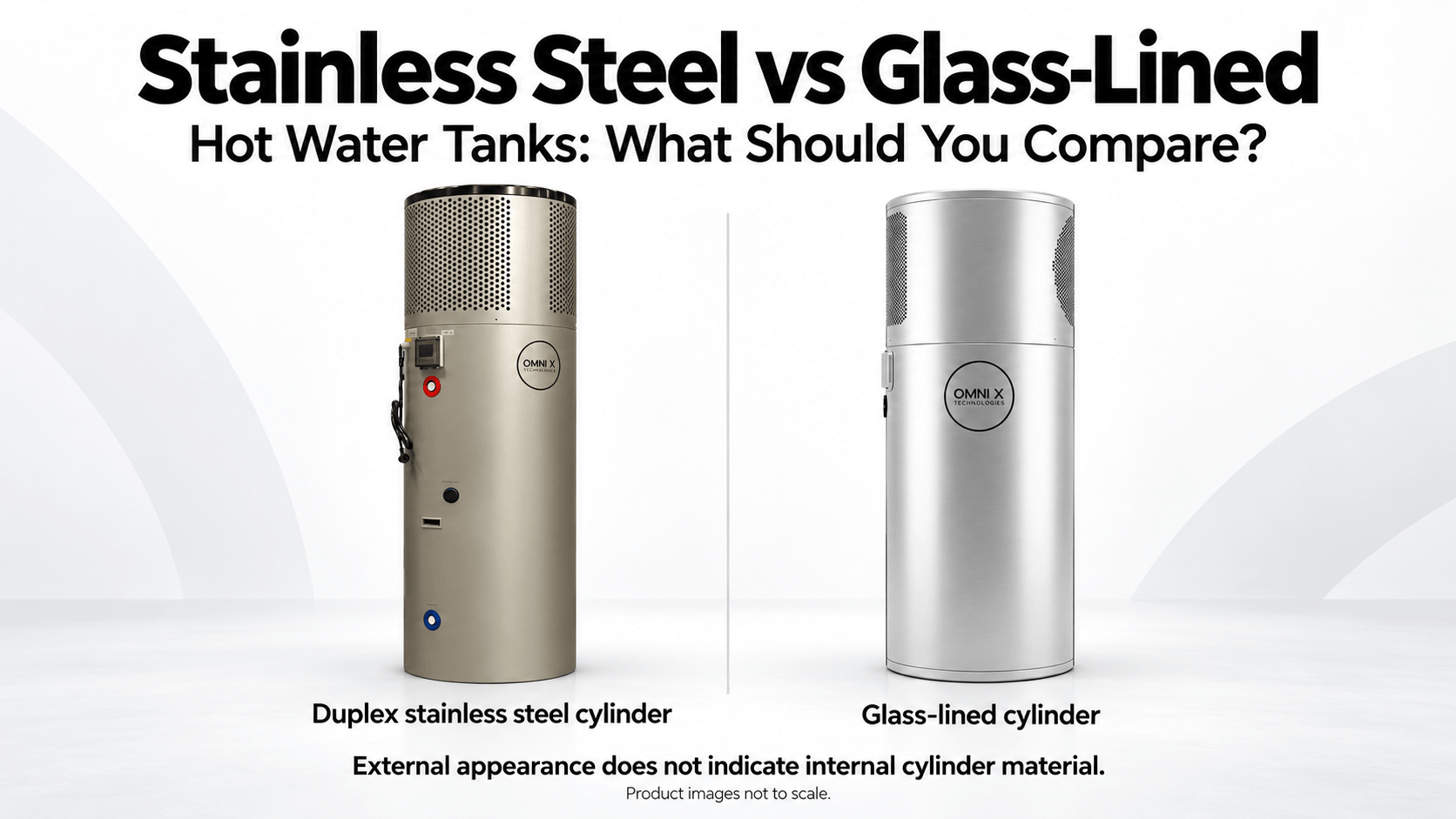
When comparing water heaters for an Illawarra home, you may see stainless steel and glass-lined tanks listed as alternatives. Both descriptions refer to the cylinder construction, but neither tells you everything about the complete appliance.
For buyers in Wollongong, Shellharbour, Albion Park and Kiama, a useful comparison starts with the exact model documents. Tank material, maintenance instructions and warranty coverage should all be considered together.
Glass-lined tanks use a protective internal lining and commonly incorporate a sacrificial anode to help protect the cylinder. Stainless steel cylinders use a different approach to corrosion resistance. The Australian Government’s Your Home hot water guide explains these basic differences and highlights the importance of water suitability.
Use the material description as a prompt for further questions. Ask the supplier to identify the cylinder material and provide the manual for the precise model being quoted. A brand name alone is not enough because a manufacturer may sell several different ranges.
Manufacturer conditions may specify acceptable water chemistry or other limits. Ask whether the model is suitable for your water supply and how that assessment is made. Mention any alternative supply, such as bore water, rather than assuming a standard recommendation applies.
Living near the coast is another reason to discuss the proposed installation environment. However, salt exposure around the appliance and water conditions inside the cylinder are separate questions. Avoid choosing a tank solely because an advertisement calls it suitable for coastal homes.
Ask for the relevant written conditions so you can keep them with the quote.
An anode-related maintenance requirement is relevant to ownership, but it is only one part of servicing. Ask for the maintenance schedule for each shortlisted model and who can carry out that work.
Your comparison notes should include:
Avoid treating “no sacrificial anode” as a promise that the entire appliance will never need servicing. Read the full maintenance instructions for the selected product.
Ask what the advertised warranty covers. Record the cylinder, parts and labour periods separately where the manufacturer distinguishes them, and check the applicable conditions.
For example, two products with the same headline cylinder warranty may have different terms elsewhere in the document. Ask how a claim is started and what records the manufacturer expects you to retain. This makes the comparison more useful than choosing the longest number on a product card.
A tank material preference should not replace the discussion about household demand, installation space and system type. Start with suitable products, then compare construction and ownership requirements within that shortlist.
You can browse Illawarra Hot Water’s product range and use the hot water services page to plan an assessment. Ask for a recommendation that explains why the complete model suits your property.
The material label alone cannot establish that. Compare the exact model’s water suitability, servicing instructions, performance and warranty conditions.
Yes. Having the manual and warranty available makes it easier to check the recommendation and understand your responsibilities before installation.

Shop online or call for same day service across Illawarra and surrounding areas
To order supply and installation, please contact our team:
Please note: an additional $185 charge will apply if a tempering valve is required.